Industry Introduction
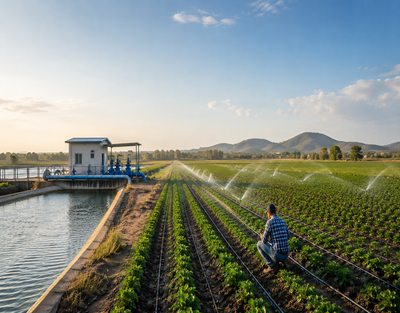
Soil monitoring is an important foundation for precision agriculture and ecological management, directly affecting crop yield, resource-utilization efficiency, and sustainable land development.
Because soil has characteristics such as uneven spatial distribution, obvious seasonal changes, and slow long-term evolution, single-point or short-term measurements often cannot reflect the real situation.
Therefore, the industry places greater emphasis on continuous monitoring, data stability, and regional representativeness.
At the same time, soil environments are long-term humid, corrosive, and frequently affected by temperature changes, placing higher requirements on sensor durability and anti-interference capability.
With the development of smart agriculture, soil monitoring data also needs to be linked with meteorological, irrigation, and fertilisation systems to enable data-driven, precise decision-making.
Core industry concerns include monitoring accuracy, long-term stable operation capability, and the practical application value of data in agricultural management and ecological protection.
Key Industry Priorities:
- Soil health
- Long-term monitoring stability
- Data continuity
Typical Applications
Soil Salinity & Nutrients:
Conductivity detection supports fertilisation and soil-improvement decisions
Soil Temperature:
Temperature monitoring reflects the crop root-zone environment
Suitable Products
Solutions
Process Control & Optimization
- Soil, temperature, and conductivity monitoring
- Provides scientific guidance for irrigation and fertilization
Environmental & Sustainability Monitoring
- Soil Monitoring
- Prevents soil salinization and degradation